Which skills do vocational and applied-sciences students need?
Short answer
Not all students need to become robot builders. A mix of process understanding, safety knowledge, digital and AI skills and working alongside technology is useful, though. At MBO (vocational) level the emphasis is on operating, maintaining and improving, at HBO (applied sciences) level on designing, integrating and data. This division is this site's own advice and not an established educational profile. Students learn the most from actually working with a robot, in an assignment with a measurable outcome.
In brief
- The division by level is this site's own advice and not an established educational profile.
- MBO: operating, maintaining and improving. HBO: designing, integrating, data and project management.
- Often forgotten: measuring and assessing critically, explaining to colleagues, knowing the regulations and privacy.
- The Machinery Regulation applies from 20 January 2027 and then replaces the Machinery Directive.
- Companies can offer internships and practical questions and train their own employees further.
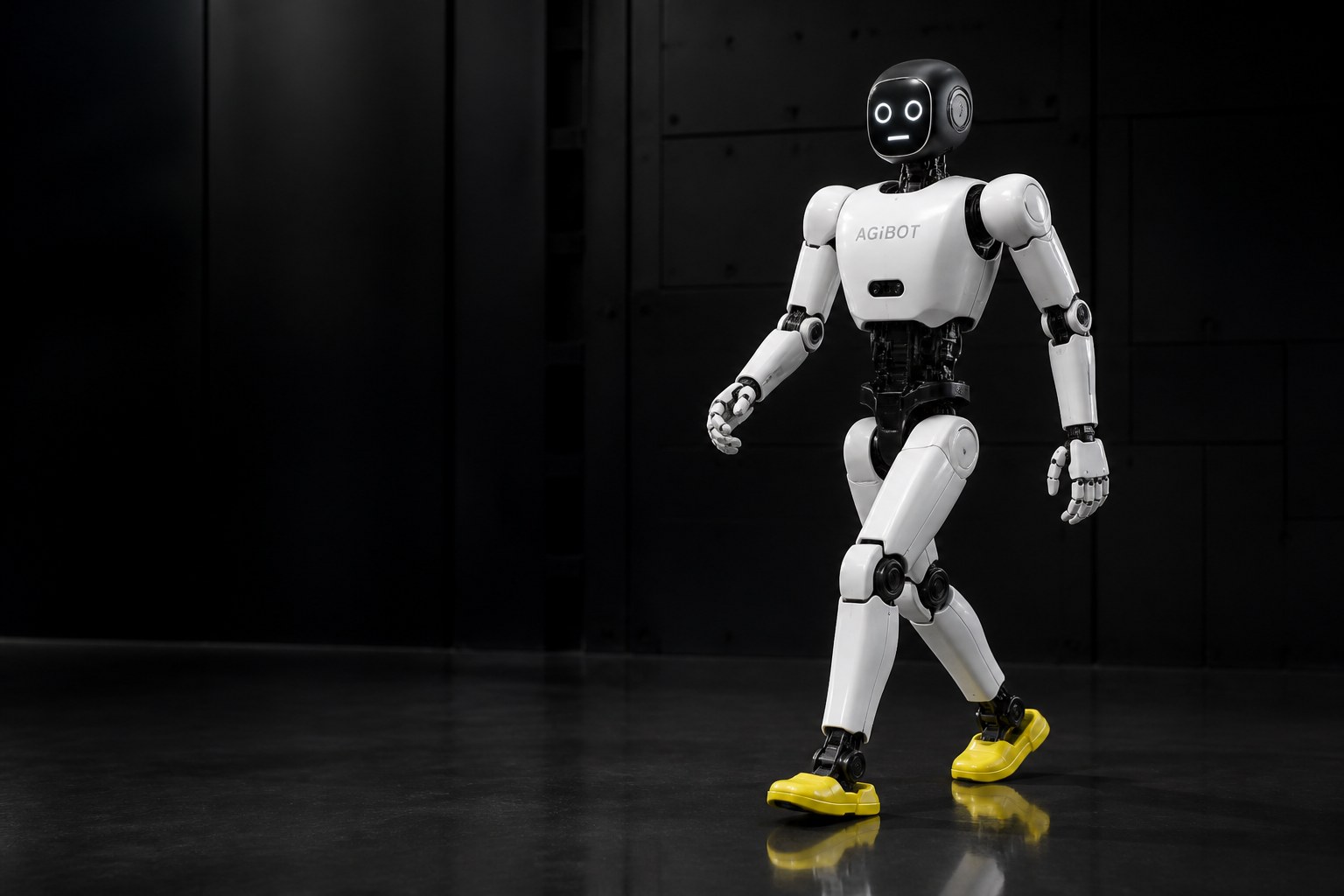
- According to AgiBot, an X2 EDU has no cameras, while a D1 Edu has a camera and an SDK. Choose the robot after the learning question.
Why this matters now
Humanoids and mobile manipulators learn tasks through demonstrations and software. That calls for people who do not just operate buttons, but understand how a self-learning system works and where the limits lie. Whether robots solve staff shortages is a separate question, see does humanoid robotics solve the labor shortage.
Skills by level
The table is this site's own division. It does not come from an educational profile or from research.
| Skill | MBO | HBO |
|---|---|---|
| Process and quality | Know the task, recognize errors, first solution | Analyze and redesign the process |
| Safety | Emergency stop, work area, working safely alongside robots | Risk assessment, standards for robot safety |
| Digital and data | Working with dashboards and tablets, recording data | Managing datasets, training and simulation |
| AI literacy | Knowing what AI can and cannot do | Assessing models, estimating limits and risks |
| Technology | Mechanics, electrical engineering, maintenance | Integration, software, system design |
| Collaboration | Clear reports, explaining to colleagues | Project management, change management |
Which standards exist and what their status is can be found in ISO standards for robot safety. Which roles emerge in companies is described in new roles in robotization. The difference between operating and redesigning is in operating robots or designing processes.
Skills that are often forgotten
- Looking critically: a robot can do a task 'almost right'. Students must learn to measure and assess.
- Explaining: bringing colleagues along in what the robot does and why.
- Knowing the regulations: the Machinery Regulation (EU) 2023/1230 applies from 20 January 2027 and then replaces the Machinery Directive. More is in the Machinery Regulation 2027 and robots.
- Privacy: camera footage in which people can be recognized is personal data under the GDPR. See camera footage and privacy.
What can companies do?
This is general advice. Offer internships on robot projects, share practical questions with educational programs and have your own employees trained further. Those who build experience with a first pilot now will know how it works in their own practice later.
How do you bring this into education?
Students learn the most from actually working with a robot: recording a task, letting it fail, improving it and measuring. That is a didactic starting point and not a research result. Which robot fits depends on the learning question. According to the AgiBot documentation (checked on 22 November 2026), the X2 EDU is about 1.31 meters tall, has 29 degrees of freedom and has no cameras or LiDAR. For the D1 Edu, AgiBot mentions an SDK and a camera. The difference between the X2 variants is in X2 Ultra or X2 EDU. Also read humanoids in education.
Sources: Machinery Regulation (EUR-Lex), GDPR (EUR-Lex), AgiBot X2 specifications, AGIBOT D1 Pro/Edu
Sources
- EUR-Lex: Regulation (EU) 2023/1230 on machinery, consolidated text of 27-07-2026 (for information) (checked on 2026-11-22)
- EUR-Lex: Regulation (EU) 2016/679, GDPR, definition of personal data (checked on 2026-11-22)
- AgiBot AimDK_X2 1.1.0: Robot Specifications (X2 EDU) (checked on 2026-11-22)
- AGIBOT: D1 Pro/Edu product page (checked on 2026-11-22)
Frequently asked questions
Do all technical students have to learn programming?
Not all at the same level. Operating requires less programming knowledge than integrating and developing. Exactly how much depends on the platform and the task.
Are these skills only for technical programs?
No. Basic knowledge of safety, AI and privacy is useful for everyone who works with robots, including in logistics or services. This is our own estimate and not a research result.
How does a program keep up with rapid developments?
Refresh practical assignments regularly and seek cooperation with companies and integrators. Choose platforms whose documentation is public.
Which robot suits the classroom?
That depends on the learning question. According to AgiBot, the X2 EDU is about 1.31 meters tall, has 29 degrees of freedom and no cameras or LiDAR. The D1 Edu is a robot dog with an SDK and a camera. See the article on humanoids in education.
Which regulations should students know?
From 20 January 2027, the Machinery Regulation applies to machines and replaces the Machinery Directive. Camera footage in which people can be recognized is personal data under the GDPR. Teach students where they can look up these rules.
What can companies do for educational programs?
Offer internships on robot projects, share practical questions with programs and have their own employees trained further. This is general advice.