How do you train a robot?
Start with one clear task. Collect examples, train a model and test whether the robot also performs the action under varying conditions.
Read more →Learn
A robot learns from the right examples and data. We collect task-specific data, prepare datasets and train and test the robot on the actions you want it to perform.
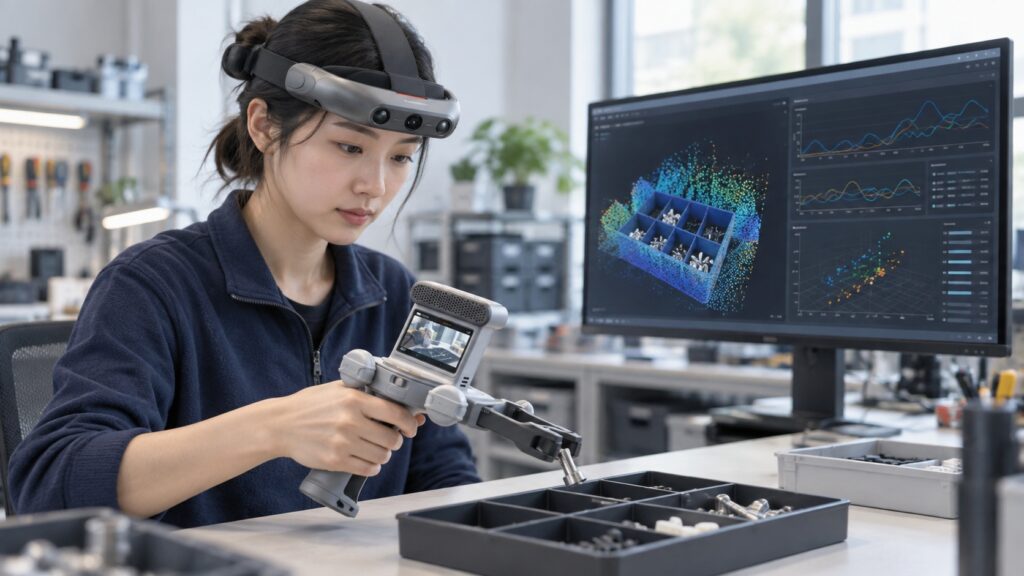
Start with one clear task. Collect examples, train a model and test whether the robot also performs the action under varying conditions.
Read more →Good training data shows how your task is performed. Organise recording, quality and storage before you start collecting at scale.
Read more →AGIBOT develops software for data collection, model training, simulation and transferring models to robots. Which combination fits depends on your task and implementation.
Read more →A robot alone is not enough to train a new task. Also prepare the workstation, software, data and people.
Read more →Discover how to organise a training programme: from the first task and demonstrations to evaluating a model and testing on the robot. AGIBOT's development environment; Humanoid-direct supports you with set-up and training.
Read more →Build a virtual task environment, collect synthetic examples and compare robot models before trialling an application at the real workstation. AGIBOT's simulation platform: practise virtually before a practical test.
Read more →01
We define the actions, objects, variation and required performance. We then choose which existing skills can be used and which training is still needed.
02
Depending on the task, we use demonstrations, teleoperation, sensor data or simulation. We check the quality, organise the examples and record which situations the dataset covers.
03
We use the collected data to train the required skill. We keep track of which data, configuration and model version were used, so that results remain comparable.
04
We also test on objects and conditions outside the training examples. This shows what works reliably, when a human needs to intervene and what additional training is needed.
The agreed dataset or trained skill, with test results and insight into the remaining limitations. Data ownership, processing and transfer are agreed in advance.