Your own training data for a robot: ownership and protection
Short answer
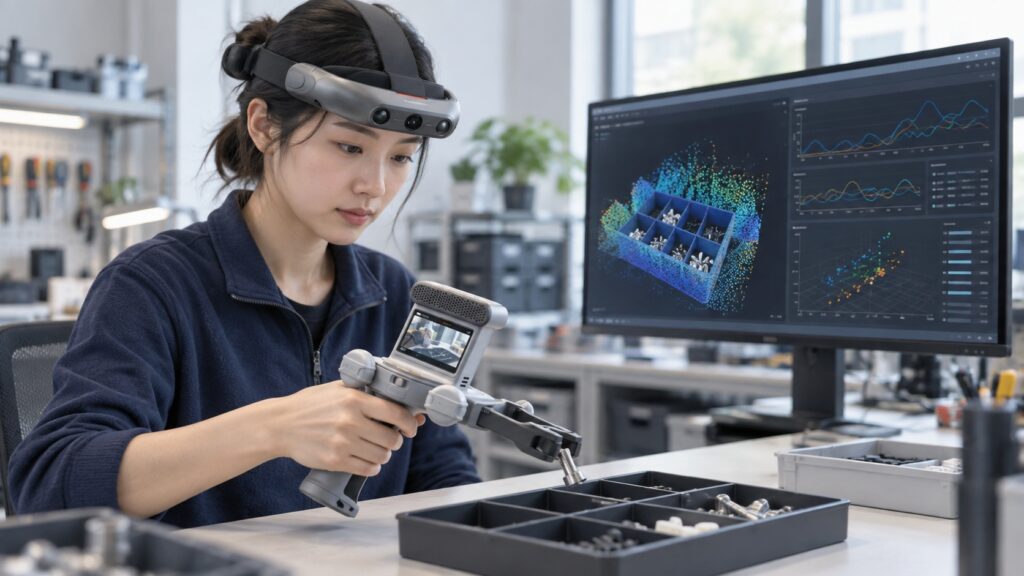
Training data from your own process captures how your people handle your product: the sequence, the approach, the exceptions. That is your expertise, and it ends up in recordings and trained models. So settle in writing beforehand who owns the recordings and the model, where the data is stored and how you can export it. If employees appear on camera, privacy rules also apply and the works council is sometimes needed.
In brief
- Demonstrations for a robot contain your expertise. That makes them valuable and sensitive.
- Settle in writing who owns the recordings and the trained models, and whether the supplier may use the data.
- Agree where the data is stored, who has access, how long it is kept and how you export it.
- If employees appear on camera, privacy rules apply: inform them, do not keep the data longer than necessary and assess whether a DPIA is needed.
- A system that can observe the behavior or performance of employees requires the consent of the works council.
- This article is not legal advice. Have the agreements for your situation reviewed by a lawyer or your data protection officer.
Why your data is valuable
A robot learns your task from demonstrations: how you pick up a fragile product, in which order you work, what you do with an exception. That knowledge is in the recordings and later in the trained model. How demonstrations are recorded is covered in teleoperation and data collection. Why a general model does not replace your own data is explained in robot foundation models.
This article is about what you settle in advance. It is not legal advice.
Where it can go wrong
| Risk | What can go wrong | What you settle |
|---|---|---|
| Unclear ownership | Supplier or partner uses your data for other customers | Record ownership and use in writing |
| Trade secrets | Footage shows products, recipes or working methods | Limit recordings to what is needed, restrict access |
| Privacy | Employees or visitors appear on camera | Inform them, limit recording, set a retention period, check whether a DPIA is needed |
| Security | Unauthorized access to data or robot | Access management and security agreements, see cybersecurity of robots |
| Loss | Data is lost or unusable when you switch supplier | Own copy and agreements on export |
Make one person responsible for the dataset: what is stored, who has access and when old data is deleted.
What you agree with the supplier
- Who owns the raw recordings and the trained models.
- Whether and how the supplier or manufacturer may use the data, including to improve other models.
- Where the data is stored and who has access. See also edge or cloud.
- In which format you can export the data and what happens to your data if you stop or switch.
More on contract points is in agreements with your supplier.
Privacy when employees appear on camera
Recordings in which employees are recognizable fall under the GDPR, the European privacy law. Ondernemersplein, the Dutch government's business portal, names three points for cameras in a business that also apply here: make it visible that filming takes place and why, do not keep images longer than necessary, and have a DPIA carried out in case of a high privacy risk, always for cameras in many places or for a longer period. A DPIA is an assessment of privacy risks in advance. More about images from robots is in camera images and privacy.
If you have a works council, it has a right of consent under the Works Councils Act on arrangements for processing and protecting employees' personal data and on facilities to observe attendance, behavior or performance. Recordings for training are not camera surveillance, but ask the works council to take a look early if employees appear on camera. More is in works council and robotization.
For your situation, involve a lawyer or your data protection officer.
Sources: Ondernemersplein, rules for camera surveillance, Works Councils Act
Sources
- Ondernemersplein (RVO): Rules for camera surveillance in your business (checked on 2026-11-22)
- wetten.overheid.nl: Works Councils Act (consolidation of February 2023) (checked on 2026-11-22)
Frequently asked questions
Does my data stay on the robot or does it go to the cloud?
That depends on how the robot and software are set up. Ask the supplier where recordings, training and the model reside and put that in writing. The difference between processing on the robot and in the cloud is explained in the article on edge or cloud.
Can I make recordings in which employees are visible?
That is possible under conditions. Camera images in which people are recognizable fall under the privacy law (GDPR). Inform the people who appear on camera, do not keep the images longer than necessary and have a lawyer or your data protection officer take a look.
When is a DPIA needed?
According to Ondernemersplein, a DPIA (data protection impact assessment) is needed when there is a high privacy risk for the people filmed, and always for cameras in many places or over a longer period. If in doubt, have an expert assess whether it applies to your recordings.
Does the works council have a say in this?
Possibly. According to the Works Councils Act, the works council has a right of consent on arrangements for processing employees' personal data and on facilities to observe attendance, behavior or performance. Whether this applies to your recordings depends on the setup.
Can I take my data to another robot or supplier?
You need to check that in advance. Ask in which format the recordings and the model are available, who may export them and what the contract says about it. Without that agreement, you only find out when you want to switch.