What can a robot hand do today?
Short answer
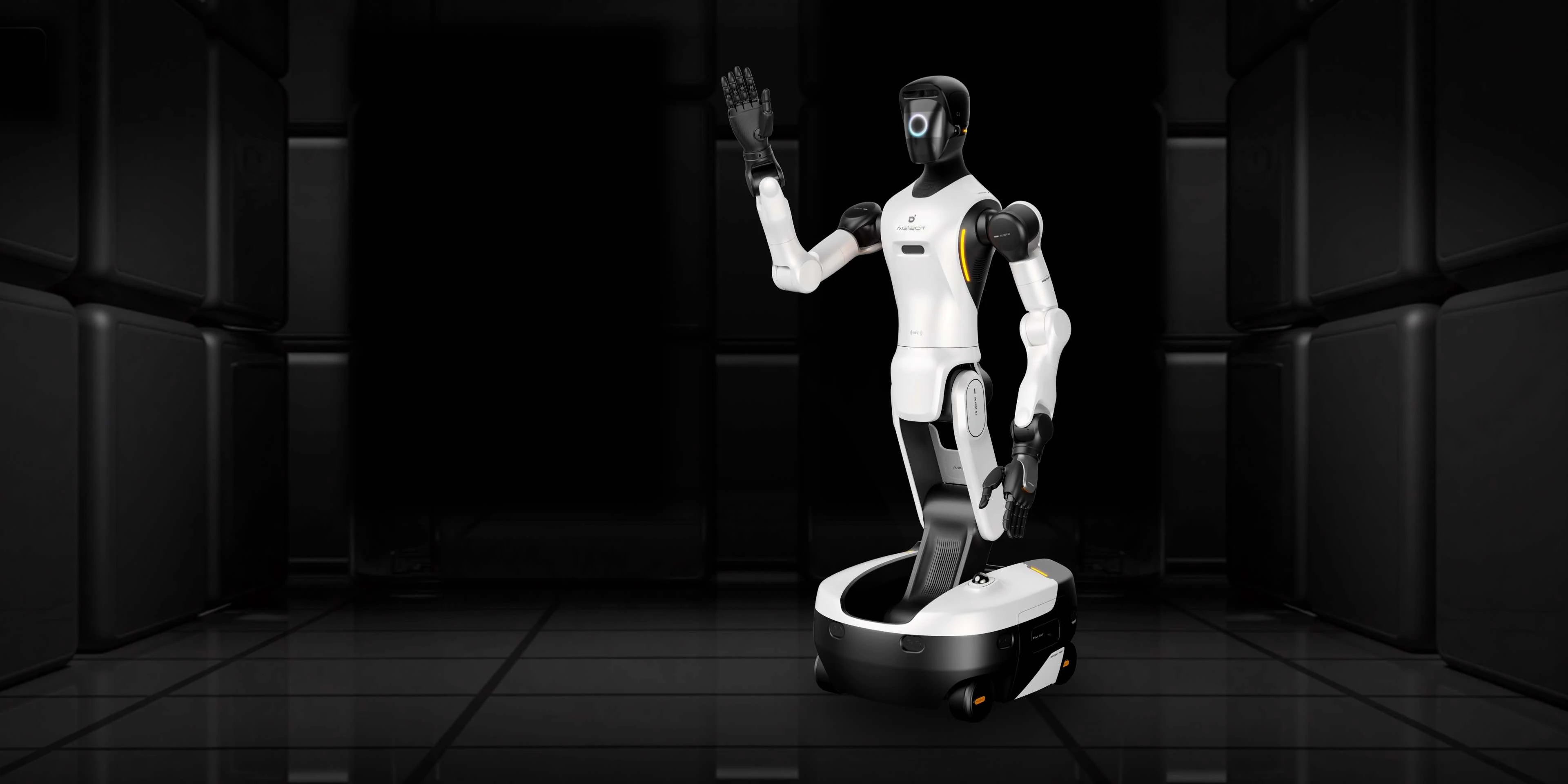
A robot hand has several powered fingers and can have tactile sensors in the fingers and palm. According to its documentation, AgiBot's OmniHand has 10 active and 6 passive degrees of freedom. Research still lists open issues: lifespan under heavy load, transferring skills between different hands and comparing results between studies. According to a recent survey, a task that succeeds once does not prove that a hand is ready for production. Whether a hand grasps your objects reliably only becomes clear from a test with those objects.
In brief
- A gripper usually moves with one degree of freedom. A robot hand has several powered fingers; the OmniHand 2025 and 3 have 10 active and 6 passive degrees of freedom.
- Tactile sensors differ per hand: the documentation lists 1D sensors, 3D sensors or no sensors, depending on the type.
- Surveys list lifespan under industrial load, transfer between hands and comparable tests as open issues.
- Learning from demonstrations can improve the control of a hand. Updates do not change the mechanics or the wear.
- Test a hand with your own objects and count the failed grasps before you choose between a hand and a gripper.
What sets a robot hand apart from a gripper
A gripper usually opens and closes with a single movement. According to the SDK documentation, AgiBot's OmniPicker 3 is a gripper with one degree of freedom. A robot hand has several powered fingers. According to the documentation, the OmniHand 2025 and OmniHand 3 (type O10) have 10 active and 6 passive degrees of freedom. Passive joints have no drive of their own and move along via the mechanics of the fingers. The OmniHand Pro 2025 has 12 active degrees of freedom and the OmniHand 3 Lite has four.
Which of the two suits your task and what each type costs in complexity, you can read in robot hand versus gripper. This article is about what a robot hand can do and what is not yet proven.
Touch: what it adds and where it hurts
Tactile sensors differ strongly per hand. In the documentation, the O10 has tactile sensors with one measuring direction in the fingers, palm and back of the hand. The OmniHand Pro 2025 has three-dimensional tactile sensors in the fingers and palm, without the back of the hand. In the documentation, the OmniHand 3 Lite has no tactile sensors.
Where tactile sensors are present, they serve, according to a survey from November 2026, among other things to detect slip and to handle fragile objects. The problem is the variety: the author calls the fragmentation of sensor types a major obstacle to reusing tactile data from one hand on another, and standardizing tactile sensors is one of the eleven open problems he names. It means that a grasping strategy trained on one hand does not automatically work on another hand.
What research still leaves open
Two surveys from 2026 give a sober picture. They are preprints, not published standards.
- Lifespan. The author of the November 2026 study calls durability under realistic load, and not the number of degrees of freedom, the limiting factor for deployment. According to him, long-term reliability has been little studied.
- Transfer between hands. The evidence that a contact-rich skill works without extra training on a hand with a different shape is limited.
- Task completed is not the same as ready. According to the same study, completing a task does not prove that the execution is physically correct or that the hand is ready for production. So also measure how often and how cleanly the grasp goes, not only whether the task ever succeeded.
- Comparability. The authors of the May 2026 study point out that studies start from different hands, sensors, tasks, data and evaluation. A score from one paper therefore says little about another hand or another task.
What software improves and what it does not
The control of a hand can learn from demonstrations. A survey on imitation learning describes that a robot in this way learns skills directly from examples by a human, without the contact with an object having to be modeled extensively. How many examples are needed for this is covered in how many demonstrations a robot needs.
For the OmniHand, AgiBot publishes an SDK with C++, Python and ROS2 interfaces and separate firmware. Such updates change the control. They do not change the mechanics, the wear or the sensors built into the hand. What a hand can ultimately do therefore depends on both.
Load and safety
The hand is not the only limit. The arm must also carry the load, and that differs per model: the A2 Ultra product page gives a maximum arm load of about 2 kg, that of the G1 Max 5 kg per arm (read on 22 November 2026). The safety of a hand next to people is not a property of the hand alone: it follows from the assessment of the whole application. How to approach that is covered in risk assessment for a humanoid.
Hand or gripper: four questions
These are questions to test your task against, not outcomes from research.
- Variation. How many different objects must the robot grasp?
- Material. Is the object hard, soft, smooth or fragile?
- Handling. Only picking and placing, or also turning, pressing and operating?
- Reliability. How many failed grasps are acceptable?
Testing it yourself
Whether a hand grasps your objects reliably is only shown by a test with those objects. Start with one defined task, note the number of attempts and the failed grasps, and allow for a test period: the first grasps are rarely right straight away. A proof of concept is a suitable format for this.
Sources: OmniHand SDK, OmniHand O10, OmniHand Pro O12, OmniHand 3 Lite, OmniPicker 3, OmniHand-firmware, AgiBot A2 Ultra, AgiBot G1 Max, Dexterous Robotic Hands in the Foundation-Model Era, Towards Robotic Dexterous Hand Intelligence, Dexterous Manipulation through Imitation Learning
Sources
- GitHub: AgibotTech/agilink_omnihand_sdk (README, product list OmniHand and OmniPicker) (checked on 2026-11-22)
- GitHub: OmniHand 2025 & OmniHand 3 (O10) C++ API (degrees of freedom, tactile sensors) (checked on 2026-11-22)
- GitHub: OmniHand Pro 2025 (O12) C++ API (checked on 2026-11-22)
- GitHub: OmniHand 3 Lite (H3L) C++ API (checked on 2026-11-22)
- GitHub: OmniPicker 3 (OP3) C++ API (checked on 2026-11-22)
- GitHub: AgibotTech/agilink_omnihand_firmware (checked on 2026-11-22)
- AgiBot: A2 Ultra product page (read 22-11-2026, page gives no date) (checked on 2026-11-22)
- AgiBot: G1 Max product page (read 22-11-2026, page gives no date) (checked on 2026-11-22)
- arXiv: Dexterous Robotic Hands in the Foundation-Model Era: A Full-Stack Survey (November 2026, single-author preprint) (checked on 2026-11-22)
- arXiv: Towards Robotic Dexterous Hand Intelligence: A Survey (May 2026) (checked on 2026-11-22)
- arXiv: Dexterous Manipulation through Imitation Learning: A Survey (April 2025, revised December 2025) (checked on 2026-11-22)
Frequently asked questions
How many degrees of freedom does a robot hand have?
That differs per type. According to the documentation on GitHub, the OmniHand 2025 and 3 (O10) has 10 active and 6 passive degrees of freedom, the OmniHand Pro 2025 (O12) has 12 active and the OmniHand 3 Lite has 4 active. The OmniPicker 3 is a gripper with one degree of freedom. A comparison per type is in the article on hand versus gripper.
Does a robot hand have a sense of touch?
Not every hand. According to the documentation, the O10 has tactile sensors with one measuring direction in the fingers, palm and back of the hand, the O12 has three-dimensional tactile sensors in the fingers and palm, and the 3 Lite has no tactile sensors. Ask the supplier what exactly the sensors measure and how you can make use of them.
How long does a robot hand last?
The AgiBot documentation that was read gives no lifespan figure. A survey from November 2026 calls durability under realistic load the limiting factor for deployment and an open problem. Ask the supplier for the cycles and load at which this was tested.
Does a robot hand get better with updates?
The control does: firmware and software can be updated, and learning from demonstrations can improve grasps. The mechanics, the wear and the sensors built into it do not change with an update.
Can I have my own products tested?
That is the only way to establish reliability for your task. Test with your own objects at the place where the robot will work and count the failed grasps. A defined pilot is the usual format for this.
Is a robot hand safe next to people?
That depends on the whole application: robot, load, speed and environment. The hand itself is not a safety judgment. A risk assessment of the application is needed.